The former Reich Air Ministry on Wilhelmstrasse, now the Ministry of Finance, has witnessed the tumultuous tides of German history, from the clandestine resistance activities of the “Rote Kapelle” during World War II to the people’s uprising of 1953. This article explores the events and personalities that have shaped this iconic structure, offering a window into the past that is both enlightening and, at times, sobering.
A Building with a Past
The Reich Air Ministry, constructed between 1935 and 1936, was a monumental structure designed by architect Ernst Sagebiel. It was one of the largest office buildings in Europe at the time and symbolic of the ambitions of the Nazi regime. The building’s imposing façade and vast corridors were intended to project power and efficiency. But, as history would have it, the building’s story is far more complex than its architectural grandeur might suggest.
During the Second World War, the Reich Air Ministry was a hub of military planning and operations. However, beneath the surface of officialdom, a group of individuals known as the “Rote Kapelle” (Red Orchestra) was orchestrating a different kind of operation. This resistance group, composed of intellectuals, artists, and communists, was dedicated to undermining the Nazi regime. They gathered intelligence, distributed anti-Nazi leaflets, and provided information to the Allies. Their activities were extremely dangerous, and in 1942, many members were arrested and executed. The building, once a symbol of Nazi might, became a silent witness to acts of courage and defiance.

The Rote Kapelle: Unsung Heroes
The “Rote Kapelle” was not a single, unified group but a network of resistance cells. It included notable figures such as Harro Schulze-Boysen, a Luftwaffe officer, and Arvid Harnack, an economist. These individuals, along with their associates, risked everything to fight against tyranny. Their story is one of bravery and tragedy, as many paid the ultimate price for their convictions.
Schulze-Boysen and Harnack were central figures in the resistance. Schulze-Boysen, despite his position within the Luftwaffe, was deeply opposed to the Nazi ideology. He used his access to sensitive information to aid the resistance. Harnack, on the other hand, was an intellectual with connections to the Soviet Union. Together, they formed a formidable partnership, coordinating efforts to sabotage the Nazi war machine.
Their activities did not go unnoticed. In 1942, the Gestapo cracked down on the “Rote Kapelle,” leading to the arrest of over 120 members. Schulze-Boysen and Harnack were among those captured. They were subjected to brutal interrogations before being executed. Their sacrifice, however, was not in vain. The information they provided to the Allies contributed to the war effort, and their legacy endures as a testament to the power of resistance.
A Mural of Contradictions
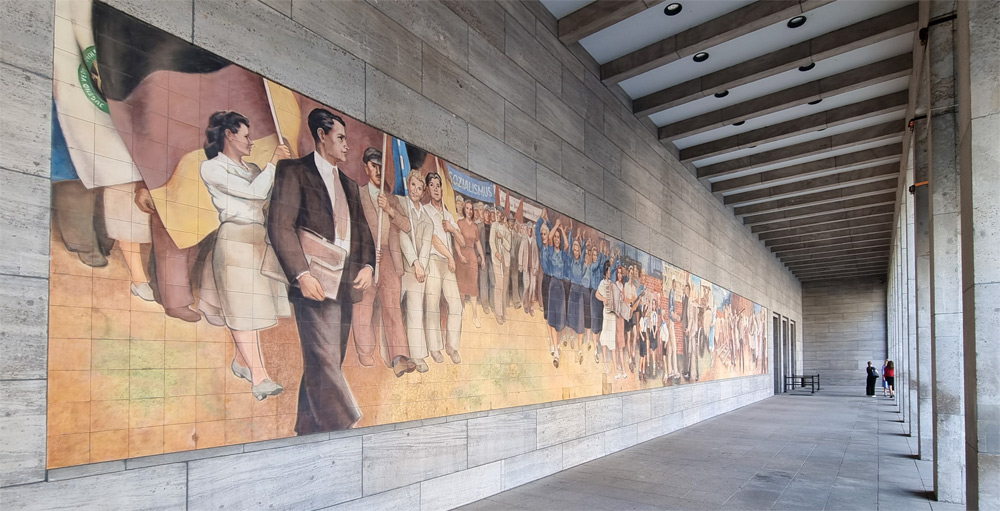
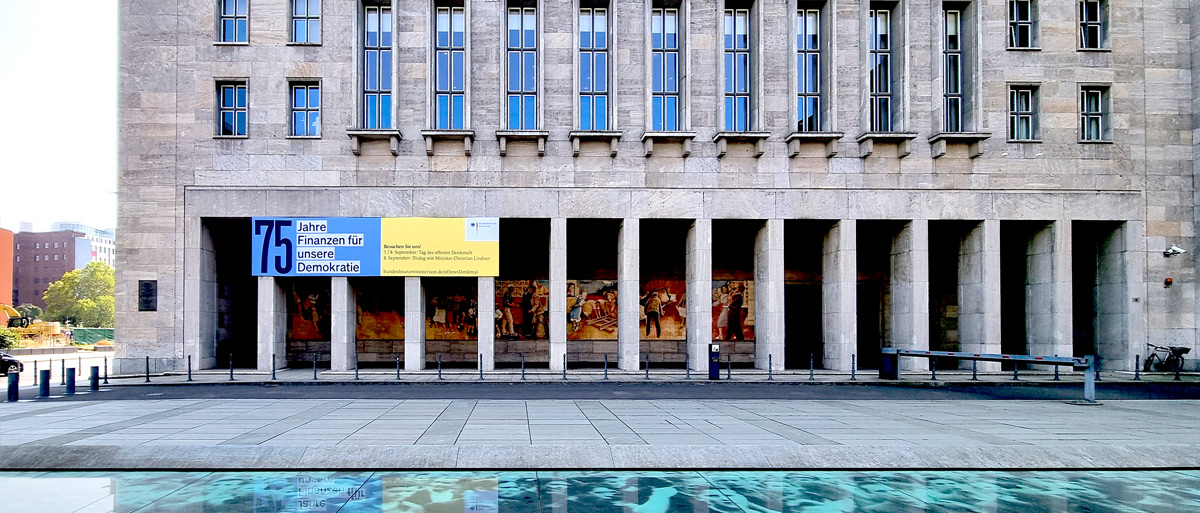
Fast forward to 1950, and the building’s façade was adorned with a striking mural designed by Max Lingner. This 18-metre artwork, crafted from hand-painted Meissen porcelain tiles, depicted scenes of happy East Germans. It was a piece of propaganda, intended to showcase the supposed prosperity and contentment of life under the socialist regime. Yet, just three years later, the building would become a focal point for dissent.
On 16 June 1953, workers in East Berlin began protesting against the government’s policies, demanding better living conditions and political freedoms. The unrest quickly spread, culminating in a mass uprising on 17 June. The former Reich Air Ministry, now used as a government building, was at the heart of the protests. The mural of cheerful citizens was in stark contrast to the reality of the situation, highlighting the disconnect between propaganda and the people’s lived experiences.
The People’s Uprising of 1953: A Turning Point
The uprising of 1953 was a significant moment in East German history. It was the first major revolt against the communist regime, and it sent shockwaves through the Eastern Bloc. The protests were sparked by a combination of economic hardship and political repression. Workers were frustrated by increased work quotas and stagnant wages, while the government’s heavy-handed tactics stifled dissent.
The protests began with construction workers in East Berlin, but they quickly gained momentum, drawing in people from all walks of life. The demonstrators called for free elections, the resignation of the government, and the reunification of Germany. The response from the authorities was swift and brutal. Soviet tanks rolled into the city, and the uprising was crushed with force. Dozens were killed, and thousands were arrested.
Despite its failure, the uprising had a lasting impact. It exposed the vulnerabilities of the East German regime and demonstrated the people’s desire for change. It was also a precursor to later uprisings in Hungary in 1956 and Czechoslovakia in 1968. The events of 1953 remain a poignant reminder of the struggle for freedom and justice.
A Building Reborn
Today, the former Reich Air Ministry houses the German Ministry of Finance. It is a symbol of Germany’s complex history and the building has been meticulously preserved, with its original features intact. Visitors can still see the Lingner tableau, a relic of a bygone era that continues to provoke reflection.
The Ministry of Finance plays a crucial role in Germany’s economic policy, overseeing the country’s budget and fiscal matters. It is a far cry from its origins as a centre of military power, yet the building’s history is never far from the surface.
A Walk Through History
For those interested in exploring this historic site, a visit to Wilhelmstrasse is a must. The area is steeped in history, with numerous landmarks and museums to discover. The Topography of Terror, located nearby, offers a sobering look at the atrocities of the Nazi regime. The Berlin Wall Memorial provides insight into the city’s divided past, while the Brandenburg Gate stands as a symbol of unity and peace.
Tips & More
When planning a visit to Berlin, consider the best times to go. Spring and autumn offer mild weather and fewer crowds, making them ideal for sightseeing. The city’s public transport system is efficient and easy to navigate, with buses, trams, and trains connecting all major attractions.
For a taste of local culture, explore the city’s many festivals and events. The Berlin International Film Festival, held in February, is a highlight for cinema lovers. The Carnival of Cultures, celebrated in May, showcases the city’s multicultural spirit with vibrant parades and performances.
If you’re looking for unique experiences, venture off the beaten path. The neighbourhood of Neukölln is a hub of creativity, with independent galleries, quirky shops, and eclectic eateries. For a more tranquil escape, head to the Grunewald Forest, where you can enjoy a peaceful walk amidst nature.
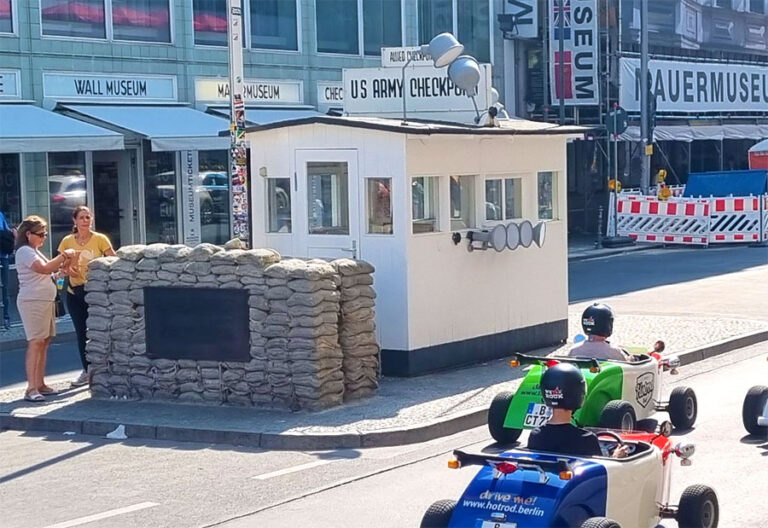
And finally, a word of advice: avoid the tourist traps. While the Brandenburg Gate and Checkpoint Charlie are iconic, they can be crowded and overpriced. Instead, seek out lesser-known spots like the East Side Gallery or the charming streets of Prenzlauer Berg. These hidden corners of the city offer a more authentic glimpse into Berlin’s vibrant character.