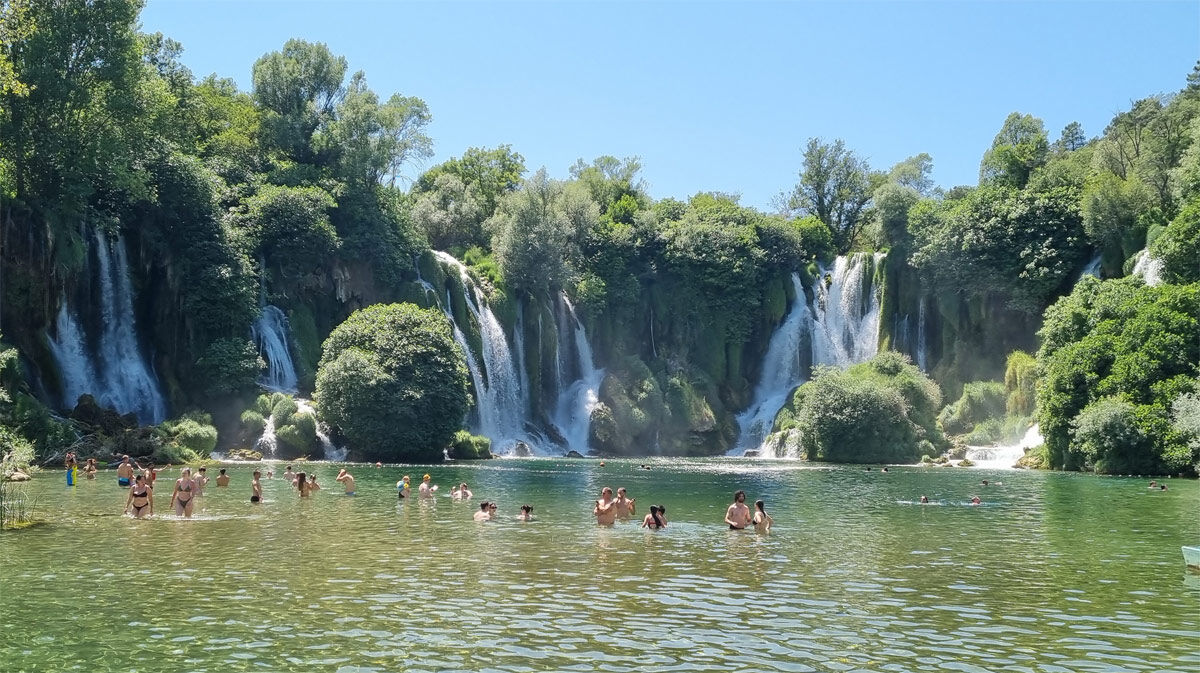
Deep in the sun-bleached karst of southern Bosnia and Herzegovina, where the limestone hills hum with heat, the horizon does something unexpected. It breaks. Just south of Mostar, the dry landscape gives way to a lush, roaring miracle: Kravica Waterfall.
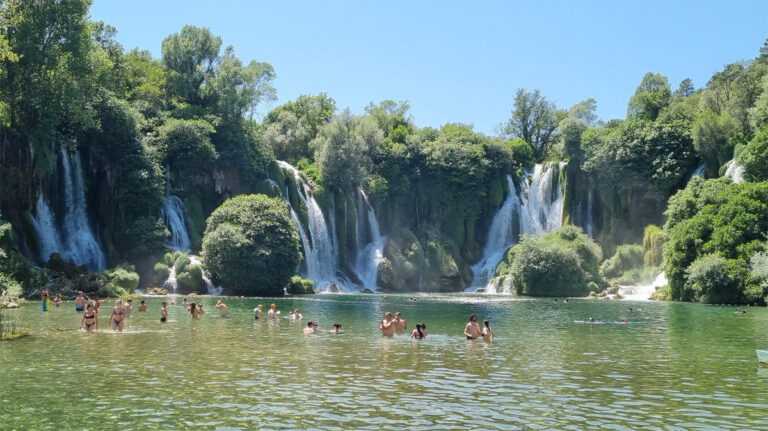
Imagine a massive, 120-metre-wide horseshoe of tumbling white water, crashing 25 metres down into an emerald-green basin. It’s a sight that feels less like a geological formation and more like nature’s own amphitheatre. While it might not hold the title for Europe’s tallest drop, Kravica wins on pure, unadulterated charm.
A River That Plays Hide-and-Seek
The magic starts with the Trebižat River. This isn’t your average waterway; it’s a “sinking river,” a quirky feature of the Balkan landscape where the water frequently disappears into underground caverns only to pop back up miles away.
The falls themselves are a living, breathing project. For millennia, the river has been busy depositing tufa—a soft, porous limestone that builds up like slow-motion sculpture. Layer by layer, moss, algae, and minerals have conspired to create these terraces. It’s a delicate dance of chemistry that means the waterfall you see today isn’t quite the same one your grandparents would have seen; it is constantly growing, shifting, and reinventing itself.
The Full-Sensory Experience
Most famous waterfalls are “look-but-don’t-touch” landmarks. Kravica is the opposite. This is a place where you are invited to jump in.
-
The Swim: There is nothing quite like the shock of cool river water on a dusty Balkan afternoon. You can swim right into the mist, mere metres from the twenty-odd streams that make up the cascade.
-
The Sound: The semicircular shape acts as a natural acoustic chamber, trapping the thunderous roar and the cool spray until the rest of the world simply fades away.
-
The Life: Surrounded by figs, poplars, and hanging vines, the area feels like a jungle oasis in the middle of a desert. Keep an eye out for grey herons patrolling the shallows or the quick flash of a kingfisher.
From Hidden Gem to Balkan Essential
For decades, Kravica was the private playground of locals—a spot for Sunday picnics and cold beers in the river. Today, its proximity to the Adriatic coast and Mostar has put it firmly on the map.
Thankfully, the development has been gentle. You’ll find wooden walkways and small, rustic cafés serving up grilled ćevapi and fresh river fish, but you won’t find any high-rise hotels. The vibe remains blissfully “unspoilt,” though if you want to beat the summer crowds, aim for a spring visit when the mountain snowmelt turns the falls into a powerhouse of white foam.
A Journey Through Time
Beyond the water, history lingers in the shadows. Look closely and you’ll find the stone remains of old watermills where locals once ground grain using the river’s might. Nearby grottoes and tufa caves offer a peek into the geological bones of the region, reminding you that this landscape has been in the making for thousands of years.
The Bottom Line: Kravica isn’t just a photo opportunity to tick off a list. It’s a place to relax, to feel the spray on your face, and to dive headfirst into the wild, watery heart of the Balkans.
Pro Tip: If you visit in autumn, the crowds thin out and the light turns a soft, golden hue—perfect for photographers looking to capture the “water amphitheatre” in its most soulful state.