David Hockney, a name synonymous with vibrant colours and innovative perspectives, has long been a towering figure in the world of contemporary art. His work, “A Year in Normandie,” is a testament to his enduring creativity and his ability to capture the essence of a place through his unique lens. But what many might not realise is the deep connection between Hockney and the historic Saltaire and Salts Mill in West Yorkshire. This article delves into the intricate tapestry of history, art, and personal connections that bind these seemingly disparate elements together.
A Year in Normandie: A Modern Masterpiece
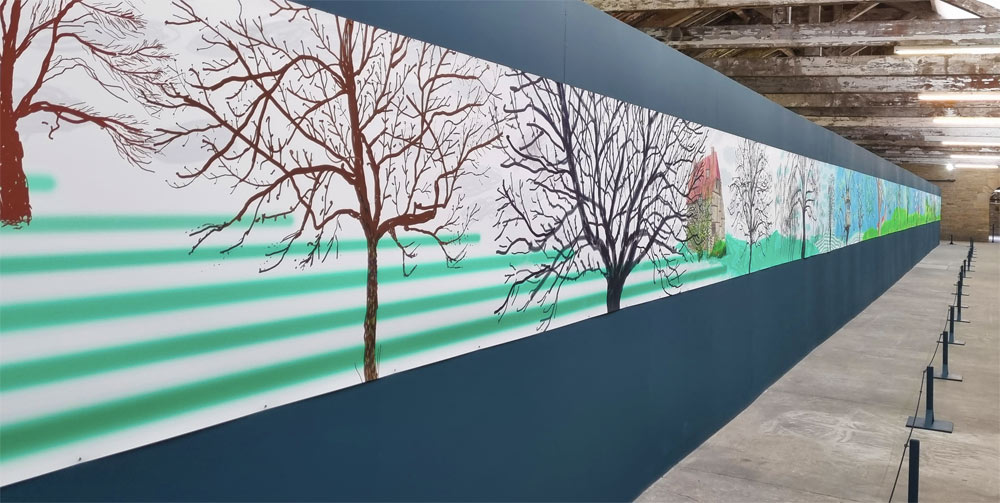
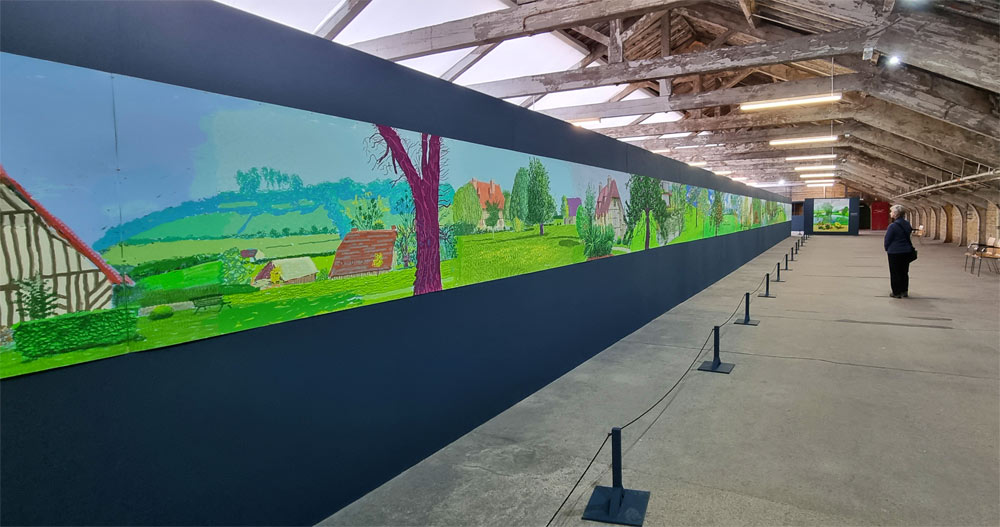
David Hockney’s “A Year in Normandie” is a digital artwork that spans an impressive 90 metres in length. Created using an iPad, this piece is a vivid portrayal of the changing seasons in the Normandy countryside. Hockney, who moved to Normandy in 2019, was inspired by the region’s natural beauty and its ever-shifting light. The work is a continuation of his exploration of digital media, a journey he began in the early 2000s. But why Normandy? And why the iPad?

Hockney’s fascination with technology is well-documented. He has often spoken about how digital tools allow him to capture the immediacy of a scene, something traditional media sometimes struggle to achieve. Normandy, with its lush landscapes and rich history, provided the perfect backdrop for this exploration. The region’s connection to Impressionism, particularly through artists like Claude Monet, adds another layer of depth to Hockney’s work. It’s almost as if he’s conversing with the past, using modern tools to echo the sentiments of those who came before him.
Saltaire and Salts Mill: A Historical Overview
Now, let’s take a step back in time to the mid-19th century. Saltaire, a model village in West Yorkshire, was founded by Sir Titus Salt in 1851. Named after its founder and the River Aire, Saltaire was designed to provide a better quality of life for Salt’s mill workers. The village was a marvel of Victorian planning, with its neat rows of terraced houses, a hospital, a school, and even a concert hall. But the jewel in its crown was Salts Mill, a massive textile mill that was once the largest of its kind in the world.
Salts Mill was not just a place of work; it was a community hub. Sir Titus Salt was a visionary who believed in the welfare of his workers. He banned alcohol in the village, built public baths, and ensured that the houses had running water and gas lighting—luxuries at the time. The mill itself was a marvel of engineering, powered by steam and employing thousands of workers. But as the textile industry declined in the 20th century, so did the fortunes of Salts Mill.
The Hockney Connection: Art Meets Industry
Fast forward to the 1980s, and Salts Mill was facing an uncertain future. Enter Jonathan Silver, a local entrepreneur with a passion for art and history. Silver purchased the mill in 1987, with a vision to transform it into a cultural and commercial centre. It was during this transformation that the connection with David Hockney was forged. Silver, a friend of Hockney’s, invited the artist to exhibit his work at the mill. Hockney, who was born in Bradford, just a stone’s throw from Saltaire, was delighted to contribute to the revitalisation of the area.
The first Hockney exhibition at Salts Mill opened in 1987, and it was a resounding success. The mill, once a symbol of industrial might, was now a beacon of artistic innovation. Hockney’s vibrant works breathed new life into the historic building, attracting visitors from far and wide. Today, Salts Mill houses one of the largest collections of Hockney’s work, a testament to the enduring friendship between the artist and Jonathan Silver.
A Journey Through Time: From Industrial Revolution to Artistic Renaissance
The story of Saltaire and Salts Mill is one of transformation and resilience. From its origins as a model village during the Industrial Revolution to its rebirth as a cultural hub, Saltaire has always been a place of innovation. The connection with David Hockney adds a modern twist to this narrative, bridging the gap between past and present. But what is it about Saltaire that continues to captivate artists and visitors alike?
Perhaps it’s the village’s unique blend of history and modernity. Walking through Saltaire, one can’t help but feel a sense of nostalgia for a bygone era. The cobbled streets and Victorian architecture transport you back in time, while the vibrant art scene keeps you firmly rooted in the present. It’s a place where history is not just preserved but celebrated, where the past informs the future in the most delightful ways.
The Art of Transformation: Hockney’s Influence on Saltaire
David Hockney’s influence on Saltaire extends beyond his exhibitions at Salts Mill. His presence has helped to cement the village’s reputation as a cultural destination. The annual Saltaire Arts Trail, for example, draws inspiration from Hockney’s work, showcasing the talents of local artists and craftsmen. The event transforms the village into a living gallery, with artworks displayed in homes, shops, and public spaces.
Hockney’s connection to Saltaire also highlights the importance of art in community revitalisation. The transformation of Salts Mill from an industrial relic to a thriving cultural centre is a testament to the power of creativity. It’s a reminder that art is not just a luxury but a necessity, a force that can breathe new life into even the most forgotten places.
A Personal Connection: Hockney’s Yorkshire Roots
David Hockney’s connection to Saltaire is not just professional; it’s deeply personal. Born in Bradford in 1937, Hockney has always maintained a strong bond with his Yorkshire roots. His early works often depict the landscapes and people of the region, capturing the essence of a place he holds dear. This connection is evident in his exhibitions at Salts Mill, where his Yorkshire-inspired pieces take pride of place.
Hockney’s love for Yorkshire is also reflected in his decision to return to the region in the 2000s, after spending several decades in California. His series of paintings depicting the Yorkshire Wolds, created between 2004 and 2013, are a celebration of the area’s natural beauty. These works, like “A Year in Normandie,” showcase Hockney’s ability to capture the changing seasons and the play of light on the landscape.
The Legacy of Saltaire and Hockney: A Continuing Story
The story of Saltaire and David Hockney is one of enduring legacy. It’s a tale of transformation, of art breathing new life into a historic village. But it’s also a story of personal connection, of an artist returning to his roots and finding inspiration in the familiar. As Saltaire continues to evolve, the influence of Hockney and his work remains a guiding light, a reminder of the power of creativity to shape our world.
Tips & More: Exploring Saltaire and Beyond
If you’re planning a visit to Saltaire, timing is everything. The village is at its most vibrant during the Saltaire Festival in September, a celebration of art, music, and community spirit. But if you prefer a quieter experience, spring and early summer offer pleasant weather and fewer crowds.
Getting to Saltaire is a breeze, with regular train services from Leeds and Bradford. Once there, the village is best explored on foot, allowing you to soak in the atmosphere and discover hidden corners. Don’t miss a visit to Salts Mill, where you can view Hockney’s work and enjoy a meal at the charming café.
For those looking to explore further afield, the Yorkshire Dales are just a short drive away, offering stunning landscapes and picturesque villages. And if you’re a fan of history, the nearby city of York is a treasure trove of medieval architecture and fascinating museums.
When it comes to dining, Saltaire has plenty to offer. From cosy pubs serving traditional fare to trendy cafés with artisanal coffee, there’s something for every palate. And for a truly unique experience, why not try a canal boat ride along the Leeds and Liverpool Canal? It’s a relaxing way to see the village from a different perspective.