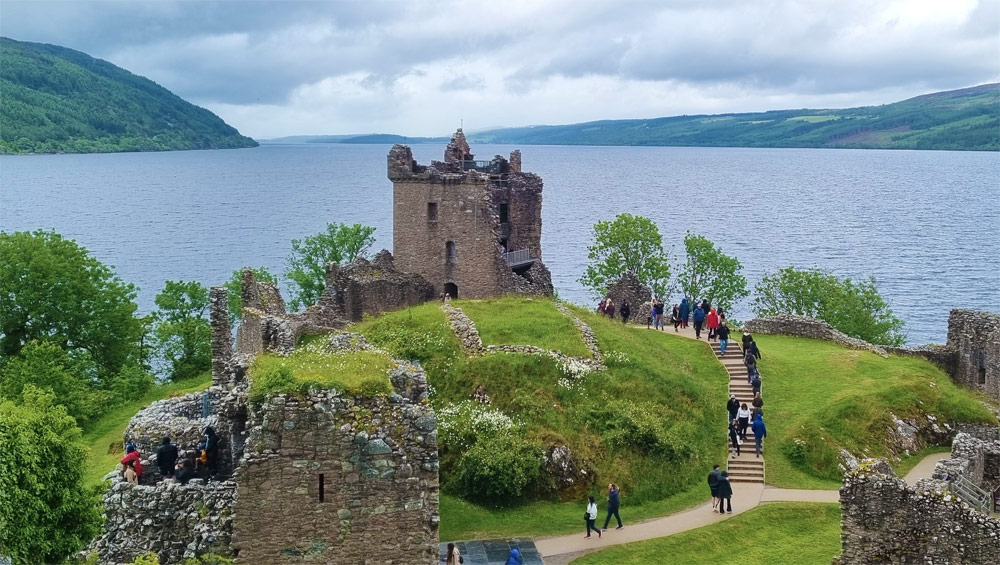
Urquhart Castle, perched on the banks of Loch Ness in the Scottish Highlands, is one of Scotland’s most iconic landmarks. The castle, with its dramatic ruins and rich history, draws thousands of visitors each year. Loch Ness itself is famous for its mysterious inhabitant, the Loch Ness Monster, which continues to intrigue and captivate imaginations worldwide. The combination of historical significance and natural beauty makes Urquhart Castle and Loch Ness a fascinating subject of study.
Introduction to Urquhart Castle and Loch Ness
Urquhart Castle is situated on a promontory on the western shore of Loch Ness, approximately 21 kilometres southwest of Inverness. The location offers stunning views of the loch and surrounding hills, making it a popular destination for tourists and history enthusiasts alike. Loch Ness, stretching over 36 kilometres, is the second largest Scottish loch by surface area and the largest by volume, owing to its great depth.
The castle’s strategic position has made it a focal point in Scottish history, playing roles in various conflicts and power struggles over the centuries. Meanwhile, Loch Ness, with its deep, dark waters, has been the centre of numerous legends and myths, most notably the tale of the Loch Ness Monster. Together, the castle and the loch present a unique blend of history and mystery.
Early Beginnings: The Origins of Urquhart Castle
Urquhart Castle’s origins can be traced back to the 13th century, although the site itself was likely used earlier by the Picts and later by the Gaels. The first stone castle was built in the 1220s, commissioned by Alexander II as part of a strategy to strengthen his hold over the region. The castle was constructed on the site of an earlier fortification, taking advantage of the natural defensive features offered by the promontory.
Throughout the 13th century, Urquhart Castle was a significant stronghold in the Kingdom of Scotland. Its construction marked a period of consolidation and expansion of royal authority in the Highlands. The castle’s early history is characterised by frequent changes of ownership, reflecting the turbulent political landscape of medieval Scotland.
Medieval Times: Urquhart’s Role in Scottish Wars
During the Wars of Scottish Independence in the late 13th and early 14th centuries, Urquhart Castle played a pivotal role. It was captured by the English in 1296 but was soon recaptured by the Scots. The castle changed hands several times during this period, enduring numerous sieges and attacks. Sir Andrew Moray, a notable Scottish leader, used the castle as a base for operations against English forces.
In the 14th century, Urquhart Castle became the property of Clan Grant, who held it for nearly 300 years. During this time, the castle was frequently attacked by rival clans, including the MacDonalds and Camerons. Despite these challenges, the Grants managed to maintain control, fortifying the castle and expanding its defences.
The Castle’s Decline and Restoration Efforts
By the 17th century, Urquhart Castle had begun to fall into disrepair. The Grants abandoned the castle in 1692, and it was partially destroyed to prevent it from being used by Jacobite forces. Over the following centuries, the castle became a romantic ruin, attracting the interest of artists and writers.
Restoration efforts began in the 20th century, with significant work undertaken to preserve the remaining structures. Today, Urquhart Castle is managed by Historic Environment Scotland, which has invested in conservation and visitor facilities to ensure the site’s long-term sustainability.
Architectural Features of Urquhart Castle
Urquhart Castle showcases a mix of architectural styles, reflecting the various periods of construction and renovation. The most prominent feature is the Grant Tower, offering panoramic views of Loch Ness. The tower, built in the 16th century, stands as a testament to the castle’s strategic importance.
Other notable features include the remains of the Great Hall, once the centre of social and political life within the castle. The gatehouse and curtain wall are also significant, providing insights into the defensive strategies employed by the castle’s occupants. Archaeological excavations have uncovered artefacts that offer glimpses into daily life during the castle’s occupation.
Legends and Myths Surrounding Loch Ness
Loch Ness is famously associated with the legend of the Loch Ness Monster, often affectionately called “Nessie.” The first recorded sighting dates back to the 6th century, when Saint Columba reportedly encountered a “water beast” in the River Ness. The modern fascination with Nessie began in the 1930s, following a series of alleged sightings and photographs.
While the existence of the monster remains unproven, the legend has become an integral part of the Loch Ness narrative. The mystery surrounding Nessie continues to draw tourists and researchers, contributing to the loch’s enduring allure.
Exploring the Castle: A Visitor’s Guide
Visitors to Urquhart Castle can explore its ruins and learn about its history through informative displays and exhibits. The visitor centre offers a comprehensive overview of the castle’s past, including a short film that sets the historical context. Guided tours are available, providing additional insights into the site’s significance.
The castle grounds feature well-maintained pathways, allowing visitors to explore at their own pace. Key areas of interest include the Grant Tower, the Great Hall, and the remains of the chapel. The surrounding landscape offers stunning views of Loch Ness, enhancing the overall experience.
Wildlife and Scenery around Loch Ness
The area around Loch Ness is known for its diverse wildlife and breathtaking scenery. The loch itself is home to various fish species, including salmon and trout. The surrounding hills and forests provide habitats for red deer, pine martens, and a wide range of bird species.
Nature enthusiasts can enjoy walking and hiking trails that offer opportunities to observe wildlife and appreciate the natural beauty of the Highlands. The Great Glen Way, a long-distance trail, passes near the castle and provides a scenic route for walkers and cyclists.
Events and Activities at Urquhart Castle
Urquhart Castle hosts a range of events and activities throughout the year, catering to different interests. Historical reenactments and living history events offer visitors a chance to experience medieval life and learn about the castle’s role in Scottish history. Educational workshops and family-friendly activities are also available, making the site accessible to all ages.
Seasonal events, such as the annual Highland Games, provide additional entertainment and cultural experiences. These events celebrate Scottish traditions and offer visitors a deeper understanding of the region’s heritage.
Planning Your Visit: Tips and Recommendations
The castle can be busy during peak tourist seasons, so early arrival is recommended to avoid crowds. Comfortable footwear is essential, as the terrain can be uneven.
Visitors should also consider exploring the wider Loch Ness area, which offers a wealth of attractions and activities. Boat tours on the loch provide a unique perspective of the landscape and the chance to learn more about its history and legends.